

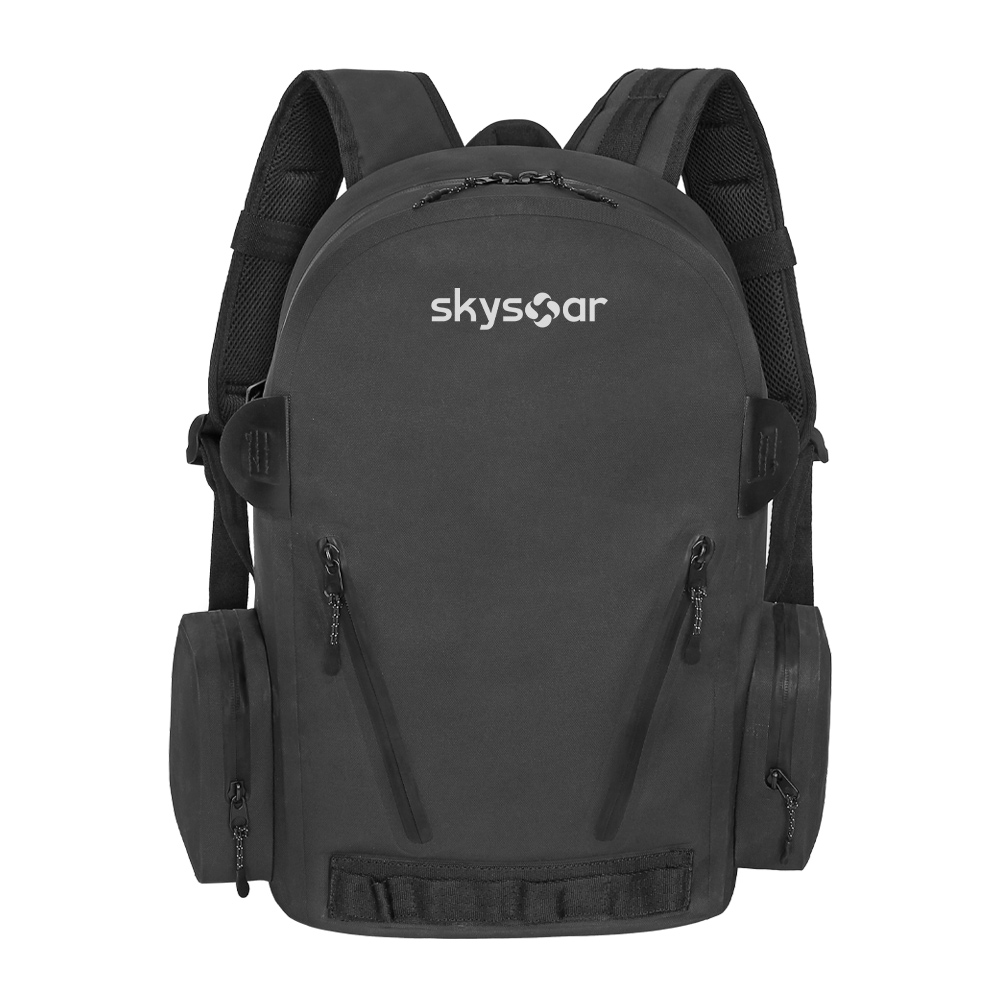
Welded bags are transforming how we think about durable, waterproof bags. If you’ve ever watched a dry bag sink underwater and stay bone-dry inside, or seen a tactical bag survive a drop into a river, chances are it was welded, not sewn.
But what exactly is a welded bag, how does it differ from a traditional stitched bag, and how do you choose the right one for your needs? This guide covers everything you need to know.
What Is a Welded Bag?
A welded bag is a bag whose panels are joined together using heat, pressure, or high-frequency electromagnetic energy to fuse materials into a single, seamless unit. The key word here is seamless: there are no stitch holes, which means no entry points for water, dust, or debris.
The welding process creates a bond that is typically as strong as the material itself. Where a sewn seam is a line of discrete points held together by thread, a welded seam is a continuous weld — one solid piece.
The Three Welding Methods
There are three primary welding technologies used in bag manufacturing. Each has distinct advantages:
Radio Frequency (RF) Welding: RF welding uses electromagnetic energy at frequencies between 13 and 40 MHz to generate heat at the interface of thermoplastic materials. The material molecules are excited, they heat up, and under pressure they fuse together. RF welding produces the strongest and most uniform welds. It is the preferred method for premium dry bags, waterproof duffels, and high-performance outdoor gear.
Sonic (Ultrasonic) Welding: Sonic welding uses high-frequency sound waves to create friction and heat at the weld point. It is particularly effective for TPU and other synthetic fabrics, producing clean, precise welds without adhesives. Sonic welding is widely used for TPU cooler bags, backpacks, and tactical bags.
Heat Welding: Heat welding applies direct heat and pressure to melt and fuse materials. It is commonly used for PVC tarpaulin bags and heavy-duty duffels where a robust, visible weld line is desirable.
How Welded Bags Are Made
Professional bag manufacturing follows a structured process:
- Material Inspection: Raw materials are inspected upon arrival (IQC) to confirm weight, color, and weldability.
- Cutting: Panels are cut to precise specifications using computer-controlled cutting machines for accuracy and repeatability.
- Welding: Panels are joined using RF, sonic, or heat welding machines according to engineered specifications.
- In-Process Quality Control: Weld quality is monitored continuously during production. Weld strength, seam alignment, and appearance are checked.
- Final Quality Control: Every finished bag is inspected before packaging. Waterproof tests, load tests, and appearance checks are performed.
This five-stage quality system is what separates professional manufacturers from the rest.
Materials Used in Welded Bags
The material you choose for a welded bag is the single most important decision in product development. The most common materials are:
- TPU (Thermoplastic Polyurethane): The premium choice. TPU is flexible, abrasion-resistant, environmentally friendly, and holds welds exceptionally well. It is compliant with REACH and CA Prop 65. TPU is the material of choice for premium dry bags and tactical gear.
- PVC (Polyvinyl Chloride): The cost-effective workhorse. PVC is easy to weld, produces durable bags, and is available in a wide range of colors and weights. Modern PVC meets REACH and CA Prop 65 standards.
- Tarpaulin Fabric: Heavy-duty coated fabric for extreme conditions. Used in military, industrial, and outdoor applications where maximum durability is required.
- Oxford Cloth and Polyester: Traditional bag fabrics that can be welded when coated with PVC or TPU. Commonly used for cooler bags, laptop bags, and travel duffels.
For a detailed performance comparison of each material, welding compatibility, and selection advice, see our Materials for Welded Bags: A Buyer’s Guide.
Waterproof Performance: A Key Distinction
When comparing bags, you’ll see two terms: water-resistant and waterproof.
Water-resistant bags repel water for a limited time. They can handle light rain, splashes, and brief exposure. But given enough time, water will penetrate.
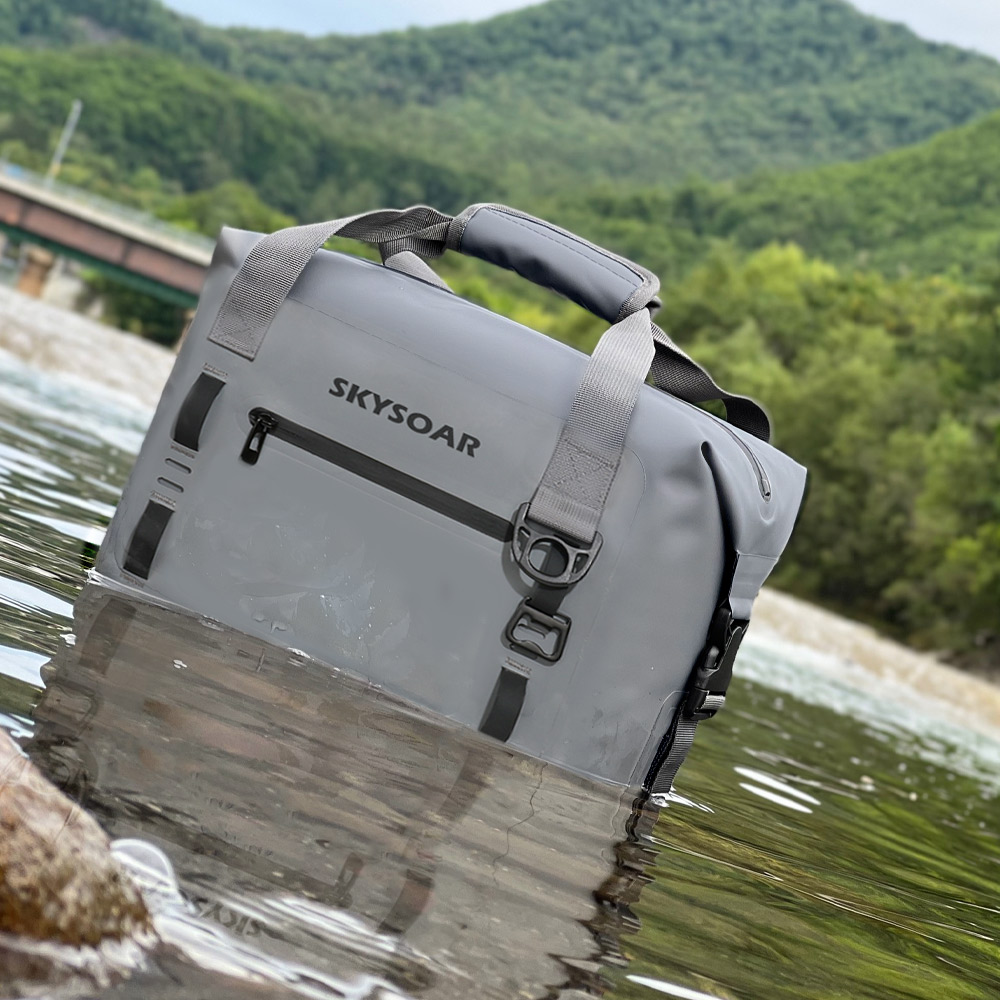
Waterproof bags are designed to prevent water from entering under specified conditions. A properly designed and manufactured welded bag can withstand immersion and keep its contents dry.
This distinction matters because it depends on construction. Sewn bags, even with water-resistant coatings, are water-resistant, not waterproof. Welded bags, by contrast, can achieve genuine waterproof status — meeting standards such as IPX7 (submersible in one meter of water for 30 minutes) or higher.
Achieving and maintaining waterproof status depends on material quality, welding process control, and proper use. Even the best welded bag can fail if the closure is not sealed or the material is damaged.
Applications and Use Cases
Welded bags are used across a broad spectrum:
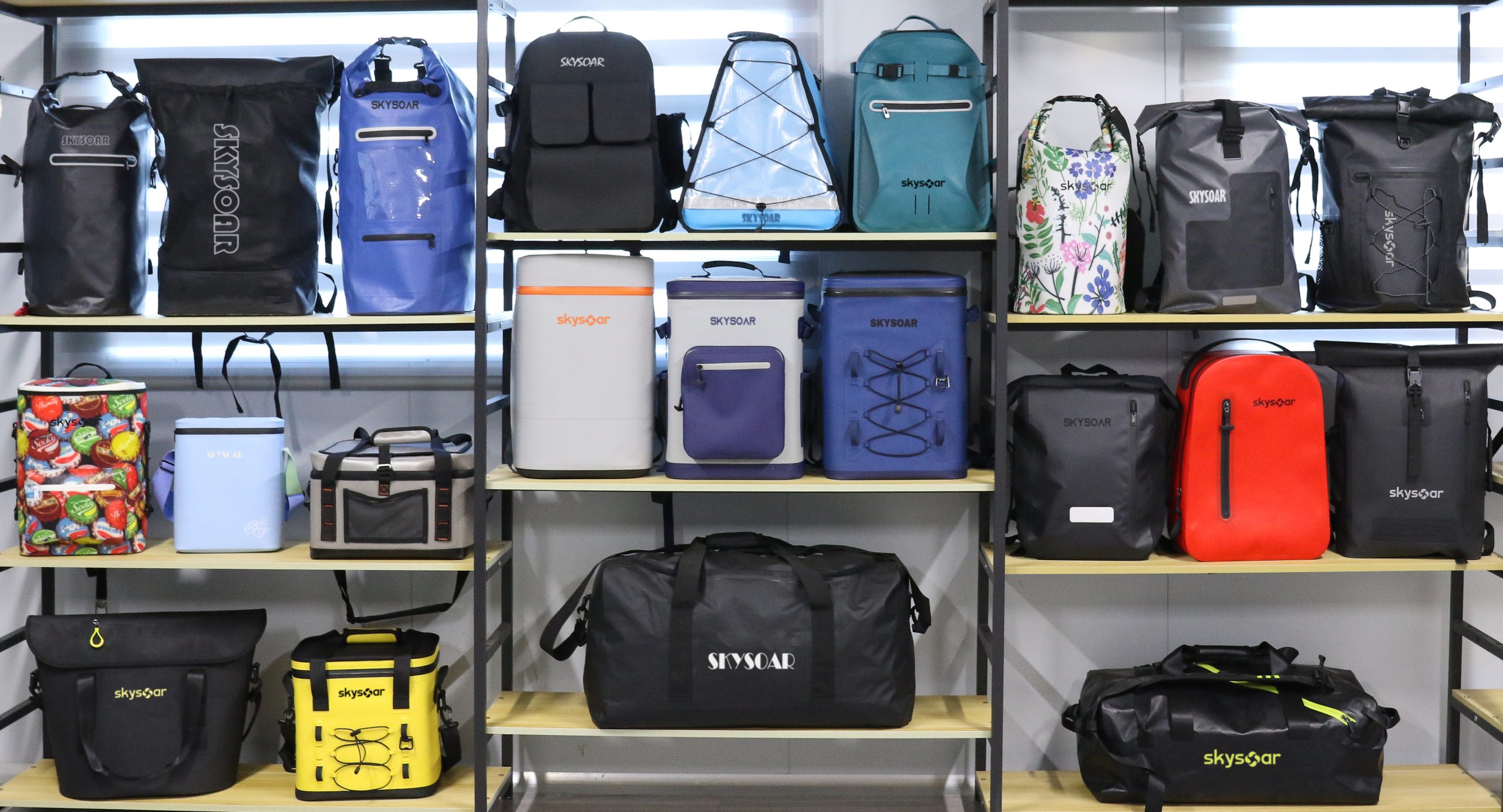
- Outdoor and Adventure: Dry bags for kayaking, rafting, boating, camping, and hiking are the most visible application. Common sizes range from 5L for small essentials to 90L+ for expedition gear.
- Water Sports: Submersible dry bags designed for diving and water sports use welded construction to maintain integrity under pressure.
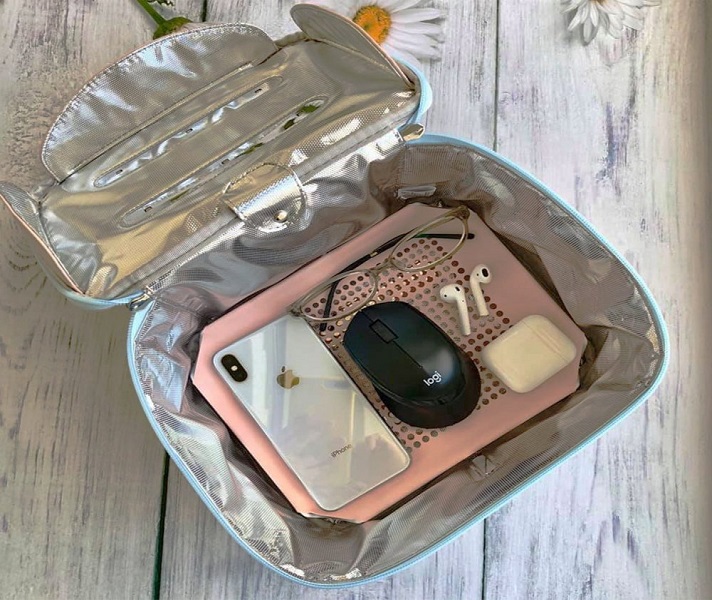
- Cooler Bags: Welded cooler bags combine thermal insulation with waterproof protection, making them ideal for camping, fishing, beach outings, and tailgating.
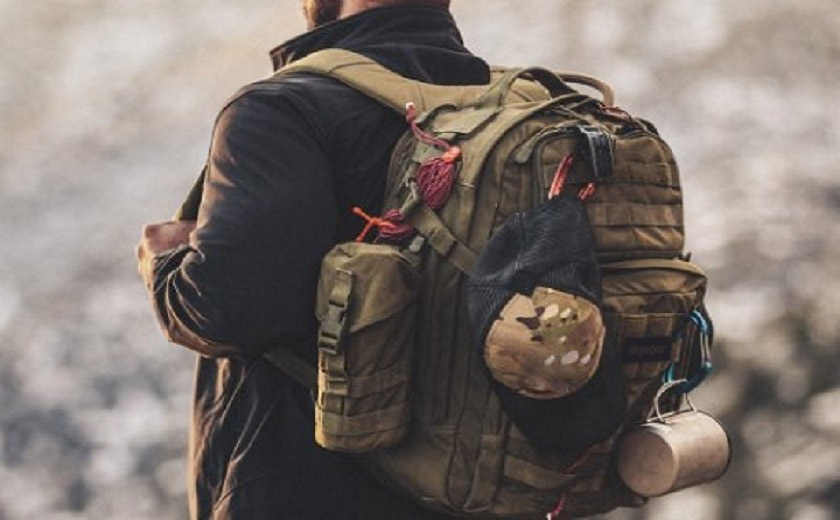
- Tactical and Military: MOLLE-compatible bags, assault packs, hydration backpacks, and medical bags benefit from the weight savings and waterproof performance of welded construction.
- Cycling: Welded panniers, saddle bags, and frame bags are designed for cyclists who need waterproof, lightweight storage.
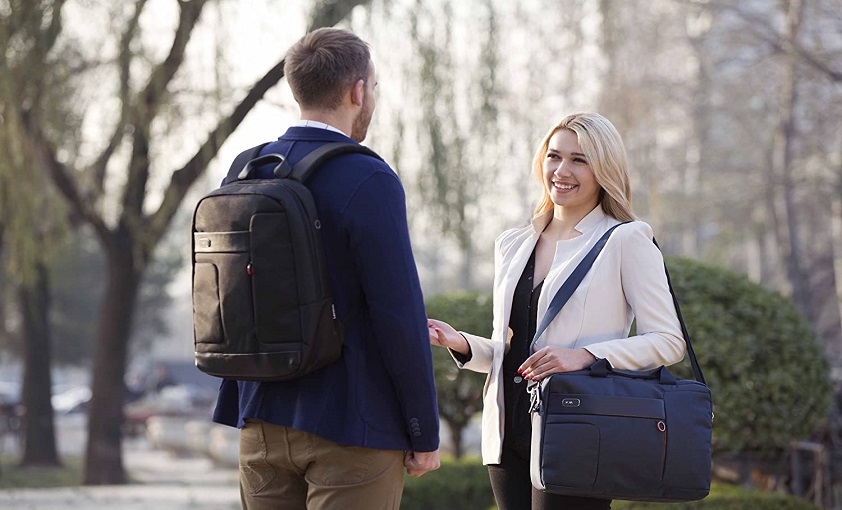
- Daily Use: Backpacks, messenger bags, and tote bags with welded construction are gaining popularity among urban commuters.
Cost Considerations
Welded bags generally cost 20-40% more than comparable sewn bags. The premium reflects the cost of welding equipment, specialized materials (TPU, PVC, tarpaulin), and skilled operators.
However, the cost difference is narrowing as welding equipment becomes more affordable and automated. And for applications where waterproof performance is critical, the premium is justified by the performance advantage.
What Makes a Good Welded Bag
When evaluating a welded bag, look for:
- Material quality: TPU or PVC that meets international standards (REACH, CA Prop 65)
- Weld strength: The weld should be as strong as the material itself
- Seam alignment: Weld lines should be straight, uniform, and free of bubbles or gaps
- Construction quality: No loose threads, uneven cuts, or poor finishing
- Certifications: BSCI, SEDEX, ISO9001 certifications from the manufacturer
- Warranty: A reasonable warranty (12 months is common)
A Note for Buyers
Welded bags have reached a point where the technology is mature and the supply chain well-established. For buyers evaluating welded bags for their product line, the key is to find a manufacturer with the right combination of experience, certifications, and production capacity for your specific application.
Still deciding between welding and sewing? Our guide Welded vs Sewn Bags: Making the Right Choice for Your Product walks through the trade-offs in detail. You can also browse our full range of welded bags.
The Future of Welded Bags
The welded bag market is growing rapidly. As outdoor recreation continues to expand, as consumers demand higher-performance gear, and as the industry moves toward more sustainable materials, welded bags are well-positioned for continued growth.
Innovations in TPU formulations, automation of welding processes, and the adoption of recycled and biodegradable materials are shaping the next generation of welded bags. Manufacturers that invest in R&D and maintain their certifications will be the ones that thrive.
Leave A Comment