

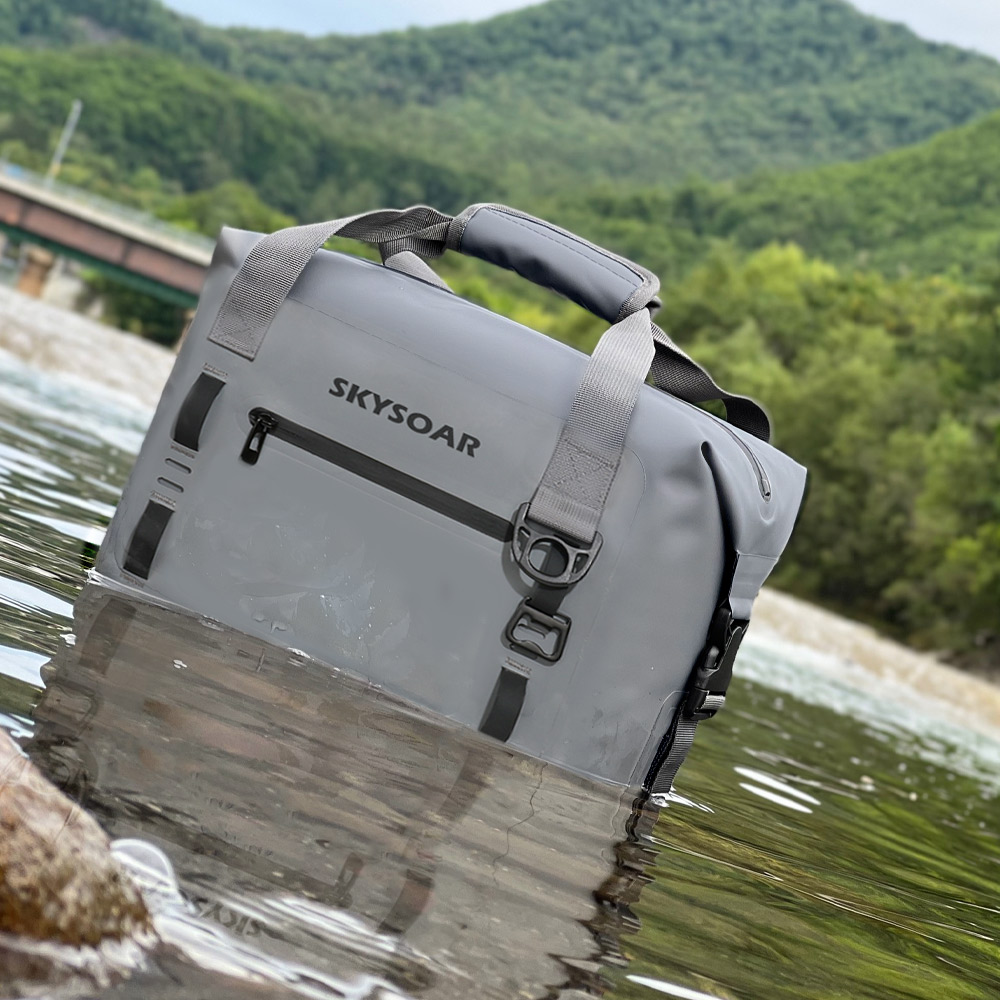
The bag manufacturing industry has two fundamental approaches: sewing bags together with needle and thread, and welding bags together using heat, pressure, or high-frequency energy. Both methods have their place. Both can produce excellent products. But they are not interchangeable.
This article helps you decide which construction method is right for your product.
The Core Difference
Sewn bags are constructed by passing a needle through fabric panels, creating holes every few millimeters. The thread holds the panels together. Water-resistant coatings and seam-sealing tapes can mitigate water penetration, but the holes remain.
Welded bags are constructed by fusing panels together using heat, pressure, or electromagnetic energy. There are no holes. The panels become one continuous piece.
This difference matters most when water is involved.
Waterproof Performance
A sewn bag can be water-resistant. It can handle light rain, splashes, and brief exposure. But given enough time, water will penetrate through the stitch holes.
A welded bag can be waterproof. It can be submerged and still keep its contents dry. The weld seam is continuous — no holes, no entry points.
This is not a matter of degree. It is a fundamental difference in construction.
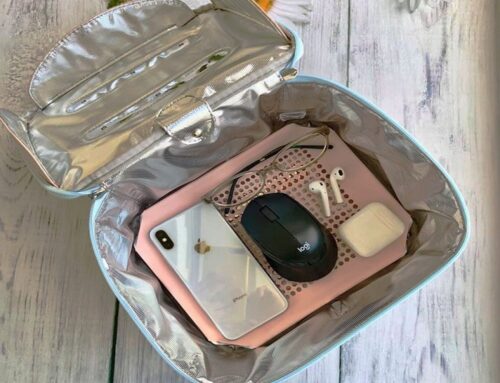
For dry bags, cooler bags, and bags used in wet environments, this distinction is critical. A sewn cooler bag will eventually leak. A welded cooler bag will not.
Durability and Longevity
Sewn bags can be very durable, but their longevity is limited by the thread. Thread degrades over time due to UV exposure, chemical exposure, and mechanical stress. Stitch holes can tear, especially in thin or lightweight fabrics.
Welded bags have no thread to degrade. The weld bond is as strong as the material itself. Welded seams do not loosen or fray. They maintain their integrity for the life of the bag.
However, there is a trade-off to weigh: if a welded bag is damaged, repairing it is far more difficult than repairing a sewn bag. We discuss this in detail in the Repairability section below.
Weight
Sewn bags require reinforced seam allowances, which add weight. Thread adds weight, albeit a small amount. Stitch holes require reinforcement patches or bar tacks, which also add weight.
Welded bags eliminate these weight penalties. The panels are joined directly, without seam allowances. The result is a lighter bag.
For outdoor and tactical applications, every gram saved on construction is a gram available for gear.
Cost
Sewn bags are generally cheaper to produce. The equipment is less expensive, the process is faster, and the skill requirement is lower. Sewn bags dominate the low-cost end of the market.
Welded bags require specialized welding equipment (RF, sonic, or heat welding machines) and more skilled operators. The materials used for welding (TPU, PVC, tarpaulin) are typically more expensive than the materials used for sewing (polyester, nylon, canvas).
However, the cost difference is narrowing as welding equipment becomes more affordable and automated.
Repairability
Sewn bags are easier to repair. A torn seam can be restitched. A broken zipper can be replaced. Sewing repair is a familiar skill.
Welded bags are harder to repair. A torn weld typically requires re-welding, which requires specialized equipment. However, the durability of welded bags means that repairs are needed less frequently.
For commercial buyers who offer warranties, this is worth considering.
Design Freedom
Sewn bags have a traditional appearance. The visible stitching can be a design feature (as in canvas bags) or a functional necessity.
Welded bags have a sleek, modern appearance. The smooth, seamless lines are visually distinctive. Welded bags also offer more design flexibility: without the constraints of seam allowances and thread tension, designers can create shapes and features that are difficult or impossible with sewing.
When to Choose Sewn Bags
Sewn bags are the right choice when:
- Cost is the primary consideration
- Waterproof performance is not required
- The bag will be used in dry environments
- Frequent repair is expected or needed
- The design calls for visible stitching as a feature
- The material cannot be welded (e.g., natural leather, some types of canvas)
- The order quantity is small (below MOQ for welding)
When to Choose Welded Bags
Welded bags are the right choice when:
- Waterproof performance is critical
- Weight is a concern
- The bag will be used in harsh environments
- The bag needs to last for years of heavy use
- A modern, sleek appearance is desired
- The material is weldable (TPU, PVC, tarpaulin, coated fabrics)
A Practical Comparison
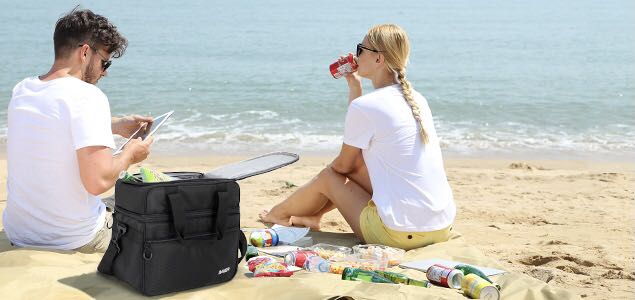
Consider a 30L dry bag. A sewn version would cost approximately $15-25 wholesale. A welded version would cost approximately $25-40. The sewn version would weigh approximately 300-400g. The welded version would weigh approximately 200-300g. The sewn version would be water-resistant, not waterproof. The welded version would be waterproof (IPX7 rated).
For a kayaking or camping application, the welded version is the clear choice. For a casual beach bag used once a month, the sewn version is adequate.
Consider a cooler bag for fishing. A sewn cooler bag would leak after repeated use. A welded cooler bag would maintain its integrity. The cost difference is justified by the performance advantage.
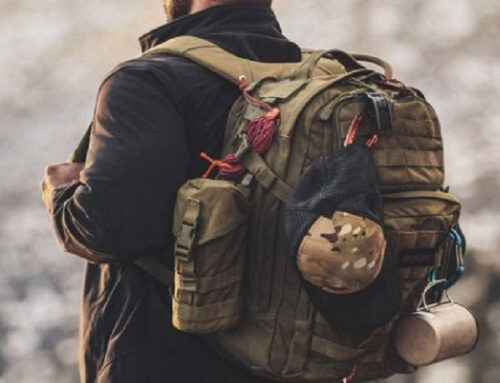
Consider a tactical bag for military use. A sewn bag would degrade over time due to UV exposure and chemical exposure. A welded bag would maintain its integrity. The weight savings would matter in the field.
The Hybrid Approach
Some manufacturers use a hybrid approach, combining welded and sewn construction. A cooler bag might have a welded outer shell for waterproof protection and sewn handles for comfort. A dry bag might have welded panels and a sewn zipper closure.
This approach leverages the strengths of each method. For many brands, the hybrid approach is the most practical path forward. Weld the parts that must be watertight, sew the parts where comfort or appearance matters. This typically adds about 15-20% to the manufacturing complexity but can result in a product that is more functional and more comfortable to use than one built entirely with either method alone.
The Decision Framework
To decide which method is right for your product, ask these questions:
- Does the bag need to be waterproof? If yes, choose welded. If no, sewn is usually the right choice unless your other requirements (durability, weight) push toward welded.
- Is weight a concern? If yes, welded is lighter.
- Is the bag used in harsh environments (UV, chemicals, abrasion)? If yes, welded is more durable.
- Is cost the primary driver? If yes, sewn may be more appropriate.
- Will the bag be repaired frequently? If yes, sewn is easier to repair.
- Does the design call for visible stitching? If yes, sewn.
- Is the material weldable? If no, sewn.
The Bottom Line
Neither method is universally superior. The right choice depends on your product’s requirements, your target market, and your budget.
For applications where waterproof performance, durability, and weight matter, welded construction is the clear winner. For applications where cost and repairability are primary concerns, sewn construction is the better choice.
The growing trend toward outdoor and tactical applications, where waterproof performance is increasingly important, is driving demand for welded bags. Manufacturers with experience in both methods, like Skysoar Bags, can advise on the optimal construction for your specific product.
Want to understand the fundamentals first? Read our Complete Guide to Welded Bags, or dive into Materials for Welded Bags when you’re ready to specify materials.

Leave A Comment